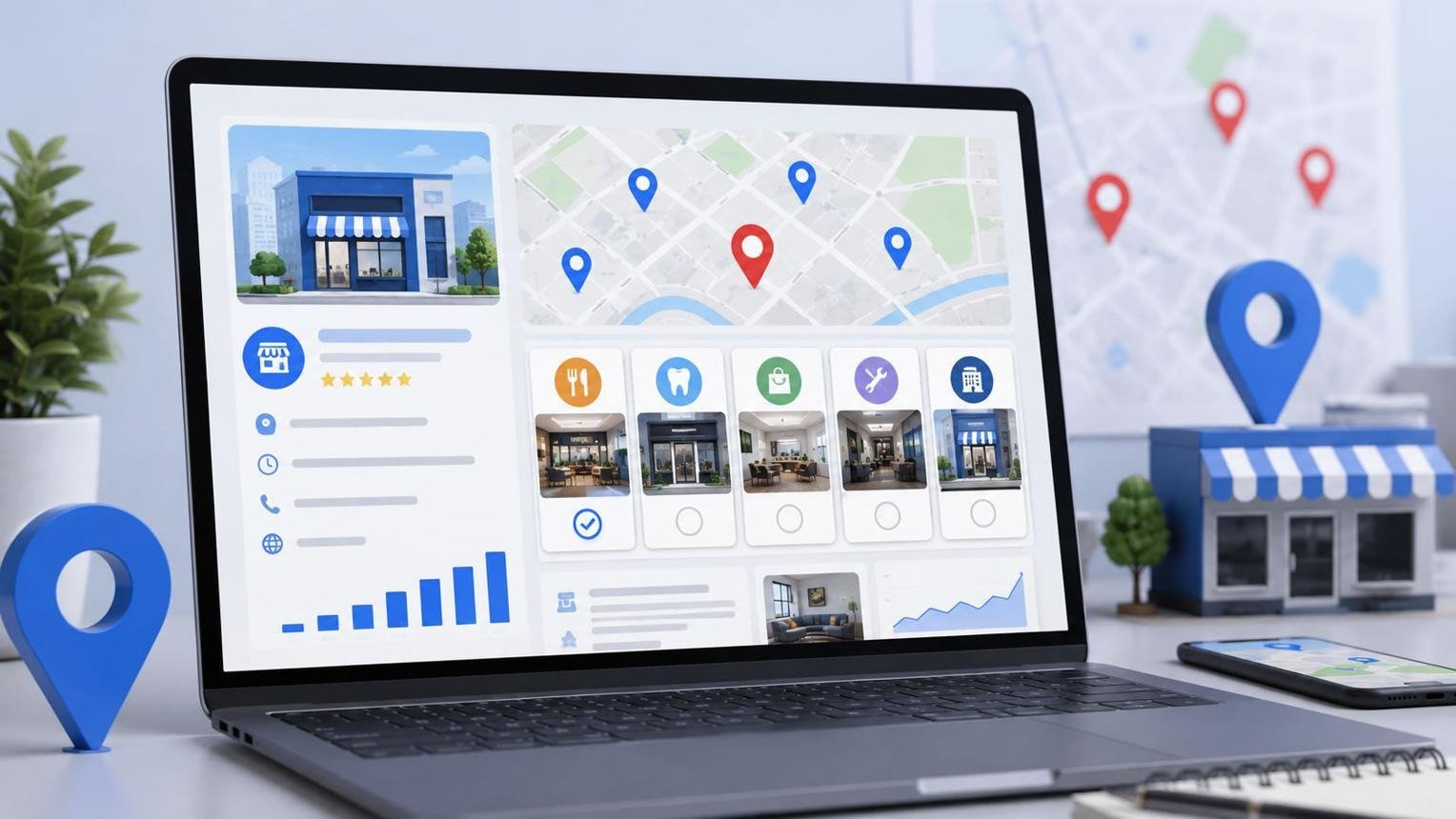
Local SEO helps businesses improve their visibility in search results for location-based searches. It focuses on connecting a business with people searching for relevant products or services in a particular city, town, or surrounding area.
For example, when someone searches for a plumber in Lahore or an electrician in Karachi, search engines try to show relevant businesses based on factors such as relevance, distance, and prominence.
For small businesses, local SEO can be a practical way to attract qualified visitors, generate enquiries, and build a stronger presence in their target market.
What Is Local SEO?
Local SEO, or local search engine optimization, is the process of improving a business’s online presence so it can appear more prominently in relevant local search results.
It involves optimizing your website, Google Business Profile, business information, reviews, and other online signals that help search engines understand what you offer and where you operate.
Local SEO is useful for businesses that serve customers in specific geographical areas, including electricians, plumbers, law firms, restaurants, cleaning companies, and professional service providers.
Why Is Local SEO Important for Small Businesses?
Many customers search online before choosing a local service provider. If your business is difficult to find in search results, potential customers may contact a competitor instead.
A well-planned local SEO strategy can help your business:
- Improve visibility for relevant local searches.
- Reach people looking for your services.
- Generate phone calls, website visits, and enquiries.
- Build trust through accurate business information and customer reviews.
- Compete more effectively with other businesses in your area.
Local SEO does not guarantee rankings or leads, but it helps create a stronger foundation for attracting customers through organic search.
How Does Local SEO Work?
Search engines use several signals to determine which businesses are relevant to a local search. Three important factors commonly discussed in Google’s local ranking guidance are relevance, distance, and prominence.
Relevance
Relevance describes how closely a business matches what someone is searching for. Accurate business categories, detailed services, and useful website content can help search engines understand your business.
Distance
Distance refers to how far a business is from the searcher or the location mentioned in the search. A business cannot control a searcher’s location, so it should focus on serving its genuine service area rather than trying to manipulate location signals.
Prominence
Prominence relates to how well-known a business is. Reviews, links, mentions, and other information about the business can contribute to its overall online presence.
Essential Local SEO Strategies
1. Optimize Your Google Business Profile
Your Google Business Profile helps eligible businesses appear on Google Search and Google Maps. Complete the profile with accurate information, appropriate categories, service details, opening hours, and genuine photographs.
Keep the information updated whenever your business details change. Businesses that travel to customers should configure their service areas according to Google’s guidelines.
2. Improve Your Website’s Local Relevance
Create useful service pages that explain what you offer and which locations you genuinely serve. Include relevant location information naturally in page titles, headings, descriptions, and body content.
Avoid creating dozens of nearly identical city pages that provide little value. Each location page should contain useful information specific to the audience it serves.
3. Keep Business Information Consistent
Your business name, address, phone number, and website should be accurate across important online platforms.
Review your business listings for outdated phone numbers, old addresses, duplicate profiles, and incorrect opening hours. Correct information helps potential customers contact the right business.
4. Encourage Genuine Customer Reviews
Customer reviews can help people evaluate your business before contacting you. Ask customers to share honest feedback about their experience, and respond professionally to both positive and negative reviews.
Never buy fake reviews or offer incentives in exchange for reviews in ways that violate platform policies.
5. Build Relevant Local Authority
Look for legitimate opportunities to earn links and mentions from relevant organizations, industry websites, local publications, and business associations.
Focus on relevance and editorial quality rather than simply collecting large numbers of low-quality backlinks.
6. Track Performance and Improve
Measure the results of your local SEO work regularly. Useful metrics include organic search clicks, impressions, relevant keyword visibility, website enquiries, phone calls, and other meaningful conversions.
Google Search Console and Google Business Profile performance data can help you understand different parts of your online visibility. Interpret each metric in context rather than relying on one number alone.
Common Local SEO Mistakes to Avoid
Some businesses spend time on activities that do little to improve their local presence. Common mistakes include:
- Using incorrect business information across listings.
- Selecting irrelevant Google Business Profile categories.
- Stuffing city names and keywords into page content.
- Creating duplicate or low-value location pages.
- Buying spammy backlinks or fake reviews.
- Ignoring technical website problems.
- Failing to track enquiries and meaningful results.
A consistent strategy built around accurate information, useful content, and a good customer experience is generally more sustainable than trying to manipulate individual ranking signals.
How Long Does Local SEO Take?
Local SEO does not have a fixed timeline. Results depend on factors such as competition, the current condition of your website, your business’s existing online presence, and the work required.
Some improvements, such as correcting inaccurate business details, can be completed quickly. Meaningful improvements in organic visibility may take several months, and competitive markets can require ongoing work.
The best approach is to establish a baseline, prioritize the most important issues, implement improvements, and measure progress over time.
Final Thoughts
Local SEO helps small businesses become easier to discover when potential customers search for relevant services in their area. By maintaining an accurate Google Business Profile, improving local website content, earning genuine reviews, and monitoring performance, businesses can build a stronger foundation for local visibility.
The goal is not simply to rank for more keywords. It is to help the right customers find your business and understand why your services may be a good fit.
If you need help improving your local search visibility, explore my Local SEO services to learn more about my approach.
Frequently Asked Questions
What is local SEO in simple words?
Local SEO is the process of improving a business’s online visibility for searches related to a specific location. It helps potential customers discover relevant businesses through Google Search, Google Maps, and other search experiences.
Is local SEO useful for small businesses?
Yes. Local SEO can help small businesses reach people searching for nearby or location-specific services. Its value depends on the business model, competition, service area, and quality of implementation.
Is Google Business Profile free?
Creating and managing a Google Business Profile is free for eligible businesses. Businesses should follow Google’s eligibility and representation guidelines when creating and maintaining a profile.
How long does local SEO take to work?
There is no guaranteed timeline. Some corrections can be made immediately, while improvements in rankings, traffic, and enquiries may take several months depending on competition and the work involved.
Can a business rank in multiple cities?
A business may appear in searches across different areas, but visibility depends on factors including the searcher’s location, relevance, distance, and prominence. Service-area businesses should represent their real operations accurately and avoid misleading location pages or fake addresses.
